
Alternative capital strategies
ETF Arbitrage: How It Works, Opportunities and Risks
ETF arbitrage exploits price differences between an ETF and its underlying securities. How the strategy works, what “delta-neutral” means and what to look out for as a prospective investor.
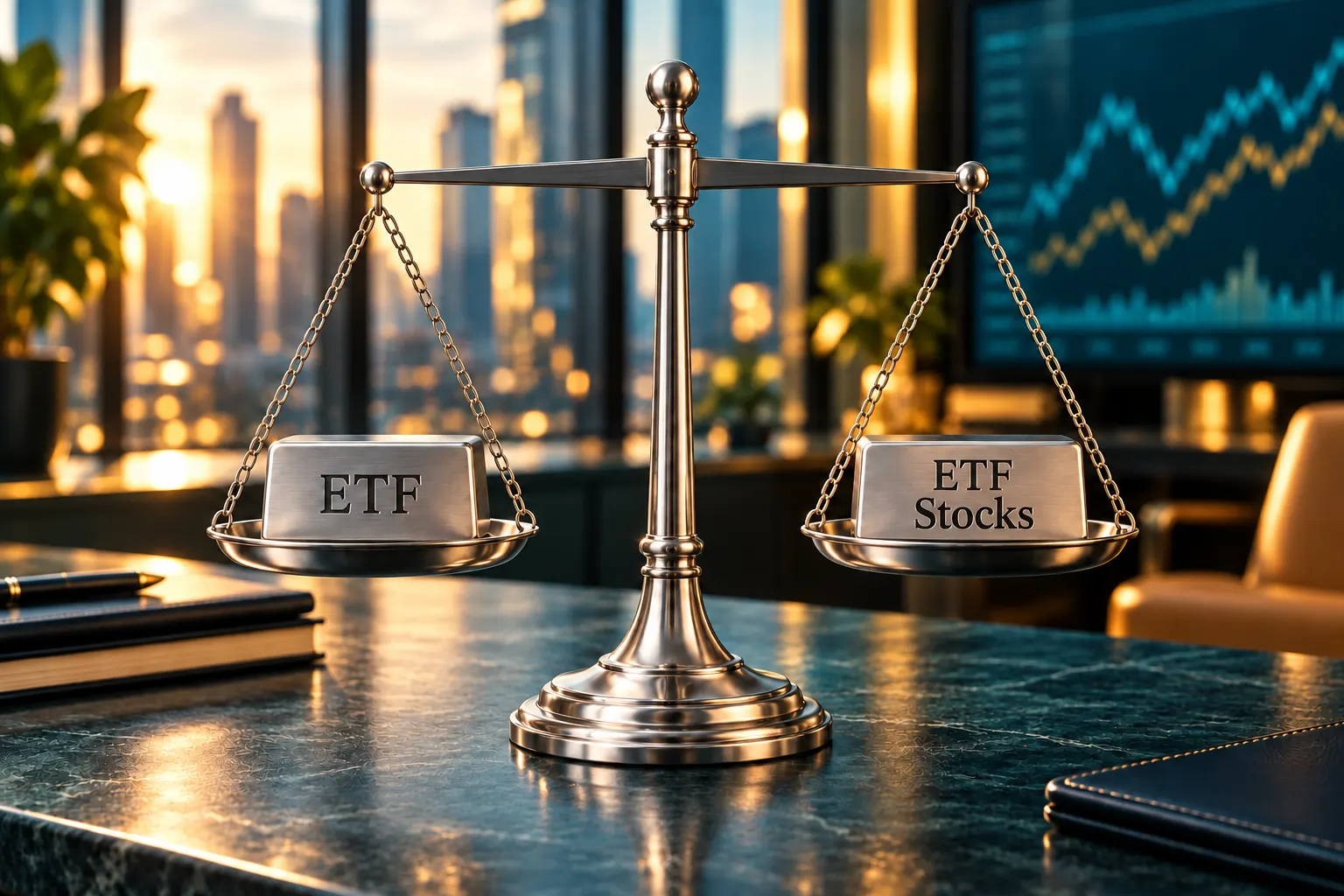
You want to grow your wealth, but you don’t want to spend every day wondering whether the stock market will rise or fall tomorrow. Anyone who has built up a substantial portfolio of shares and bonds often asks: Are there sources of return that depend less on the general direction of the stock markets? And what will happen to my portfolio during the next market crash?
One approach is the ETF arbitrage strategy presented here. It is not publicly offered but available exclusively through a Swiss asset manager. It focuses on temporary price differences. Professional trading systems aim to exploit these differences systematically and to limit general market risk through offsetting positions.
I’ll show you how the principle works, why execution is crucial and which questions you should clarify before a possible investment. If it is of interest to you, I can give you access to this strategy.
Tip: You’ll find the key information on the strategy in the factsheet on the ETF Arbitrage Strategy. Enter your email address on that page to get access to the factsheet.
What is ETF arbitrage?
An ETF is an exchange-traded fund. It tracks, for example, a stock index and holds a corresponding basket of securities. Besides its market price, the fund has a calculated net asset value, or NAV for short.
During trading, these two values do not have to match exactly. Supply and demand, differing trading activity in the underlying securities and ongoing price formation can cause temporary deviations.
This is where ETF arbitrage comes in: the trading system tries to buy the relatively cheaper side and sell the relatively more expensive side at the same time. If the prices then move back together, this can produce a gain.
The idea behind the returns: exploit price differences and keep dependence on market direction as low as possible. Whether this works depends on execution, costs, liquidity and hedging, among other things.
A simple example
Imagine, in simplified terms, that an ETF trades at €100.20. At the same time, a corresponding basket of its constituents costs €100.00.
A professional market participant could buy the basket and sell the ETF short at the same time, i.e. sell borrowed ETF shares. If the price difference later narrows and both positions are closed, a gain can result.
If the difference falls from €0.20 to €0.05, the gross gain is €0.15 per unit. Trading costs and, where applicable, securities lending and financing costs are deducted from this.
The example only illustrates the principle. In practice, matching quantities, prices that can actually be traded and fast execution are crucial. If the difference widens or one side cannot be traded as planned, losses can occur.
What does ‘delta-neutral’ mean?
“Delta” describes how sensitive a position is to changes in the underlying price. In a delta-neutral approach, long and short positions are balanced so that their immediate price risks offset each other as far as possible.
If prices rise, the long position may gain while the short position loses. If prices fall, it can be the other way round. What matters is the relative price movement between the positions.
The hedge has to be monitored continuously and adjusted when necessary. Differences in composition, trading halts or rapid market moves can mean that it does not work fully.
Delta-neutral therefore does not mean a capital guarantee and does not rule out losses. The strategy is designed to reduce the immediate directional risk; other risks remain.
Why professional implementation is so important
Price differences alone are not enough. They have to be large enough to cover all costs and must be tradable in practice. Such opportunities often close very quickly.
The strategy documents describe an automated implementation: a trading system looks for price deviations and manages orders, positions and risk parameters according to fixed rules.
As a prospective investor, the key question for you is whether the implementation is transparent:
- Which price relationships are actually traded?
- How are long and short positions matched?
- Which position sizes and leverage are permitted?
- What costs arise at trading and product level?
- What happens in the event of technical failures or a lack of liquidity?
Automation can work quickly and consistently. What remains decisive is the trading logic, the infrastructure and the oversight of the system.
What results have been documented?
The overview provided shows a net performance of 28.31% in US dollars for the calendar year 2025. This is a historical figure from the provider, not an independent audit, and says nothing about the return you will achieve in the future. Your personal tax situation has to be considered separately.

A single annual figure is not enough for an assessment anyway. You also need the full monthly performance, interim drawdowns, the length of the track record and whether the results come from live trading or simulations.
For investors who think in euros, exchange rates come into play as well: a positive result in US dollars can be lower or higher in euros.
So before you decide, ask for a current, dated performance record and the complete product documentation.
What risks remain with ETF arbitrage?
The word arbitrage says little about the actual risk. What matters is how a strategy is implemented and through which product it is offered.
Price and hedging risk. Price deviations can grow larger or last longer than expected. Offsetting positions may not fully cancel each other out.
Liquidity and costs. In stressed markets, closing positions can become more difficult and more expensive. Rising borrowing or financing costs can also weigh on results. Any leverage used amplifies potential losses.
Technology and operations. Errors in the algorithm, data problems or outages at service providers involved can disrupt trading.
Product and issuer risk. If the strategy is offered through an actively managed certificate, a so-called AMC, you hold a certificate as an investor. Its legal structure and redemption terms need to be checked separately. The risks differ from holding ETF shares directly.
Currency and availability. With an investment in US dollars, exchange rates can change your result. In addition, the contractual rules on redemption, notice and payout apply.
A partial or total loss of the capital invested is possible. A calm track record so far does not limit future losses either.
Who is the strategy suitable for?
ETF arbitrage can be an option for experienced, risk-aware investors who want to explore an additional source of return and reduce their dependence on rising stock markets.
To do so, you should understand the strategy and the product structure and be able to bear losses financially.
The overview provided is expressly not aimed at retail investors. Whether a specific investment is permitted and suitable for you has to be determined on the basis of the current documents and your investor category. The amount of your assets alone does not answer this question.
My roadmap for you
If you would like to look into this in more detail, I suggest the following order:
- Understand the principle. Where are the returns supposed to come from, and when can the strategy lose money?
- Read the factsheet. Get a first overview of the strategy and its reported results.
- Review the current documents. These include the product terms, costs, risk information and performance records.
- Clarify the open questions. In particular investor category, minimum investment, custody, redemption and currency.
- Fit it into your own financial planning. Only then can you judge whether, and to what extent, you want to pursue it further.
Go to the factsheet on the ETF Arbitrage Strategy →
If you have questions about the model and the information available, book a no-obligation call →. I’ll explain the background and, if you are interested in taking it further, put you in touch with the relevant partners.
Frequently Asked Questions
What is ETF arbitrage in simple terms?
ETF arbitrage exploits temporary price differences between an ETF and a corresponding basket of its underlying securities. Offsetting long and short positions are meant to generate a gain when the prices move back together.
Is ETF arbitrage risk-free?
No. In practice, hedging, liquidity, cost and operational risks remain, among others. Depending on the product, issuer and currency risks are added. A total loss is possible.
What do market-neutral and delta-neutral mean?
Both terms describe the aim of reducing dependence on general market movements. Delta neutrality refers to offsetting immediate price sensitivities. It guarantees neither steady returns nor a complete hedge at all times.
Can the strategy generate returns when prices fall?
In principle yes, because the idea behind the returns is based on relative price differences. This does not mean a guaranteed gain in falling or highly volatile markets, though. In periods of stress in particular, liquidity and execution risks can increase.
Do I have to trade myself?
In the implementation described in the documents, a professional trading system handles the trading. Your task is to examine the strategy, the product and the risks carefully.
Where can I find the factsheet?
On my page on the ETF Arbitrage Strategy. After entering your email address you get access to the factsheet; the note on further information by newsletter is right next to the form.
Conclusion
ETF arbitrage offers a different view of the capital markets: temporary price differences can be a source of return, even when the general market direction is unclear. A professional, delta-neutral implementation is designed to limit the immediate market risk.
For your decision, however, what counts is the specific trading system, verifiable results and the legal terms of access. The factsheet is a good first step towards answering these questions.
I’ll support you from assessing your personal situation through to making a decision and putting it into practice. To do so, I connect you with selected partners.
This article is for general information only and does not constitute investment advice or a personal investment recommendation. The availability of an investment product depends, among other things, on your investor category and place of residence. Investments involve risks up to and including total loss. Past performance and target returns are not a reliable indicator of future results. The current binding product documents are authoritative. As of September 2026.


