IAB projects
The investment allowance (IAB) explained simply: How Section 7g of the Income Tax Act (EStG) works
With the investment allowance, you can deduct up to 50 per cent of a planned investment from your tax bill in advance. How it works, who can claim it and what you need to bear in mind – explained simply.
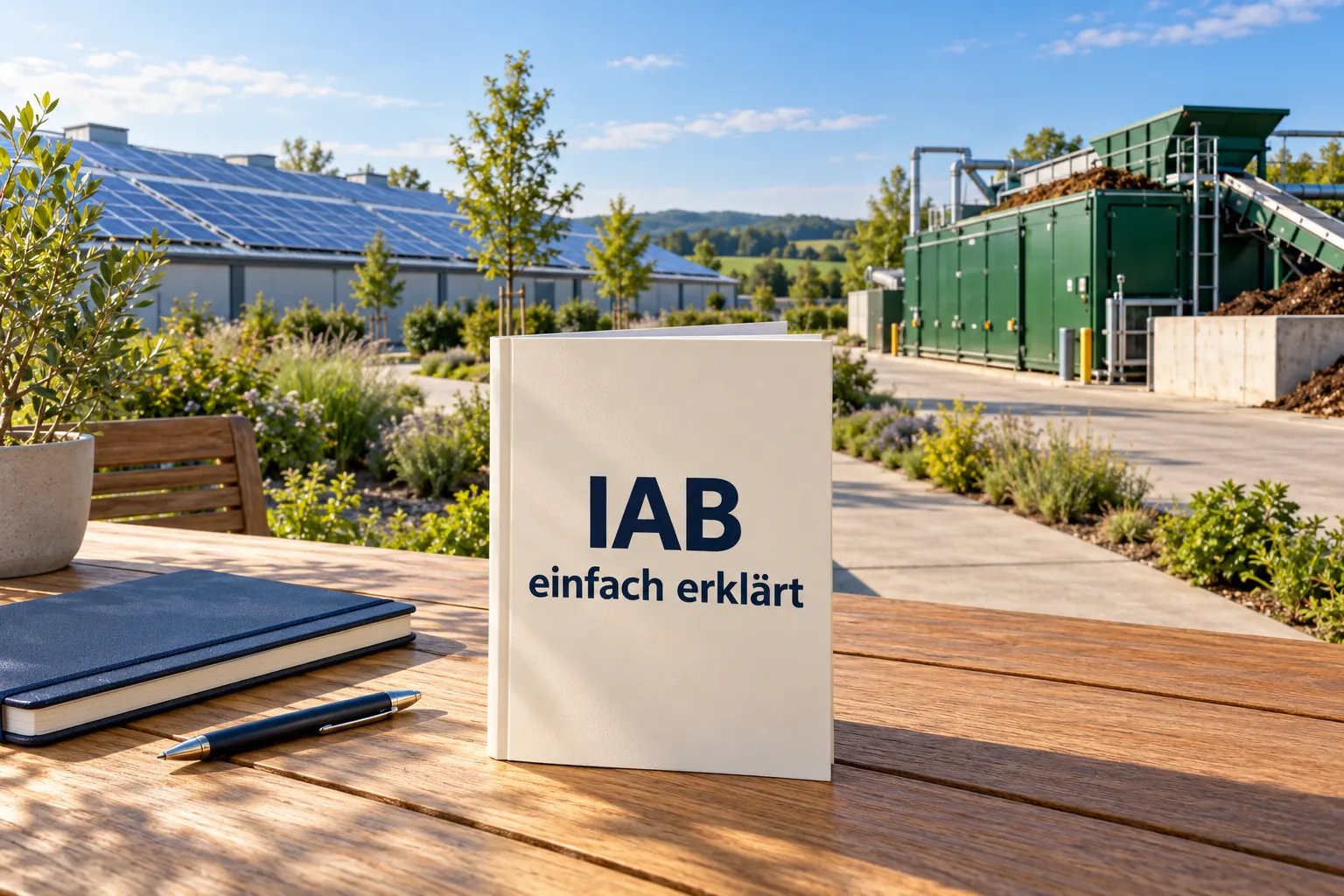
Anyone on a high income can easily end up paying 42 or 45 per cent income tax. The investment allowance (IAB) is one of the few legal means by which this burden can be significantly reduced. It is set out in Section 7g of the Income Tax Act and was originally intended for small and medium-sized enterprises. This is precisely what makes it attractive to high-income individuals too – through setting up their own small business.
Video: Prefer to watch rather than read? I also explain the IAB in a video: Investment Allowance (IAB) explained simply ▶
Tip: You can see straight away how much tax an IAB saves you on your income with my IAB calculator →
What is the capital expenditure allowance?
With the IAB, you can cover up to 50 per cent of the costs of a planned investment in advance before deduct the cost of the purchase as a business expense. The deduction reduces your business’s profit. If this results in your business making a loss, this loss will be set off against your other income, such as your salary, severance pay, occupational pension or capital gains.
Here’s an example: You’re planning to buy a solar panel system for €200,000 over the next three years. In that case, you can claim €100,000 as an IAB today. So you’ll benefit from the tax saving before you’ve even paid for the system.
Who can use the IAB?
The IAB is only available to businesses, i.e. traders, self-employed people, and farmers and foresters. As an employee or pensioner, you’ll need to run your own small business to qualify. This could be, for example, a commercial solar panel system, a battery storage unit, a compost bin or a tiny house for letting.
It is important that the business is genuine: it must be set up to make a profit in the long term. A project undertaken solely for tax reasons, which is not economically viable, is classified by the tax office as a hobby. In that case, the tax benefit is lost.
The key requirements
- Profit threshold: The business’s profit must not exceed €200,000 in the year of the deduction. For a new, small business, this is not usually a problem. You can use several IABs for several businesses.
- Maximum amount: A total of up to €200,000 in IAB is available per business. A higher amount is possible through additional independent businesses, such as one business per spouse.
- Movable assets: This applies to depreciable, movable assets such as solar power systems, battery storage units or machinery. Buildings and land are not included.
- Business use: The asset must be used almost exclusively (at least 90 per cent) for business purposes in the year of acquisition and the following year.
- Three years: The investment must be made within three years of the deduction.
What happens when you invest?
When you purchase the asset, the IAB is added back to the profit. At the same time, you may reduce the acquisition cost by the same amount. The two offset each other. The result is that the subsequent depreciation will be lower, because part of the cost has already been deducted in advance.
In addition, special depreciation under Section 7g(5) of the Income Tax Act (EStG) applies to the same assets. This allows for additional depreciation of up to 40 per cent over the first five years, on top of the standard depreciation. It is the combination of the IAB and special depreciation that makes the model so effective.
And what if the investment doesn’t materialise?
In that case, the IAB will be revoked retrospectively in the year the deduction was made. The tax saved will be reclaimed, plus interest. You should therefore only plan to use the IAB for investments that you really intend to make and are able to make.
Please note: IAB 2023: If you set up an IAB in 2023, the investment must be in place by 31 December 2026. You can read here what you need to do now: IAB 2023: Invest by 31 December 2026 →
A calculation example
An unmarried female entrepreneur has a taxable income of €300,000 in 2026. She is planning to invest €200,000 in a battery storage system and is setting aside an IAB of €100,000 for this purpose.
- Income tax excluding IAB: around €115,500
- Income tax with IAB: around €72,900
- Savings: around €42,700; around €45,000 including the solidarity surcharge
Calculated using the 2026 basic rate, with the solidarity surcharge shown only on the last line, and excluding church tax.
For every euro, the IAB saves around 45 cents in tax here, because it applies precisely to that part of income which is taxed at the top rate.
The IAB defers part of the tax to later years. Anyone who continues to have a high taxable income can make use of the IAB several times in future, thereby permanently reducing their taxable income.
Why the IAB is particularly worthwhile
The IAB is most useful in years when income is particularly high. I have written my own articles and created my own calculators on this subject:
- A large severance payment: Severance pay in 2026: How BMW, Mercedes and others can keep more of their money and the Severance pay calculator
- Company pension as a lump sum: Withdrawing your company pension: How to keep more of your capital and the Company Pension Calculator
- Sale of a medical practice, business or limited liability company: Selling your practice or business: How to save on tax and the Business Sale Calculator
- A consistently high income: the IAB Calculator
Common mistakes
- Starting too late: An IAB project needs time to get off the ground. Plan it before the year with the high income comes to an end.
- Just look at the gear: The investment must be viable even without any tax benefits.
- Concentration risk: If you invest solely in the electricity market, you’re tied to a single market. By diversifying across different projects, you can reduce the risk.
- Dealing with tax matters without a tax adviser: This should be handled by a tax adviser who is familiar with your overall situation.
Frequently Asked Questions
What is the investment allowance (IAB)? A tax deduction under Section 7g of the Income Tax Act (EStG): Businesses may deduct up to 50 per cent of a planned investment in movable assets in advance as a business expense.
As an employee, can I use the IAB? Yes, through your own small business, such as a commercial solar panel installation. Any loss incurred by the business will be offset against your salary.
What is the maximum permitted IAB? Up to 50 per cent of the planned investment, up to a maximum of €200,000 per business.
How much tax does the IAB save? This is equal to your personal tax rate applied to the amount deducted. For high earners, this amounts to 42 to 45 cents per euro, plus the solidarity surcharge and, where applicable, church tax.
What happens if I don’t invest? The IAB is repealed with retroactive effect; the tax is to be reclaimed with interest.
Until when can I claim the IAB? In the tax return for the year in which you wish to claim the deduction. It is often still possible to do this retrospectively, provided the tax assessment notice has not yet become final.
Conclusion
The investment allowance is a powerful legal tool for anyone who pays a lot of tax. It reduces your tax liability even before you make the investment and can be used strategically in years when your income is particularly high. The key is to have a genuine project that makes good business sense.
I’ll guide you through the process, from assessing your personal situation right through to decision-making and implementation. To this end, I’ll put you in touch with selected partners. Tax advice should be sought from your tax adviser. You can find out more about the IAB in my free e-book.
This article is for general information purposes only and does not constitute tax or legal advice. Last updated: October 2026.

